
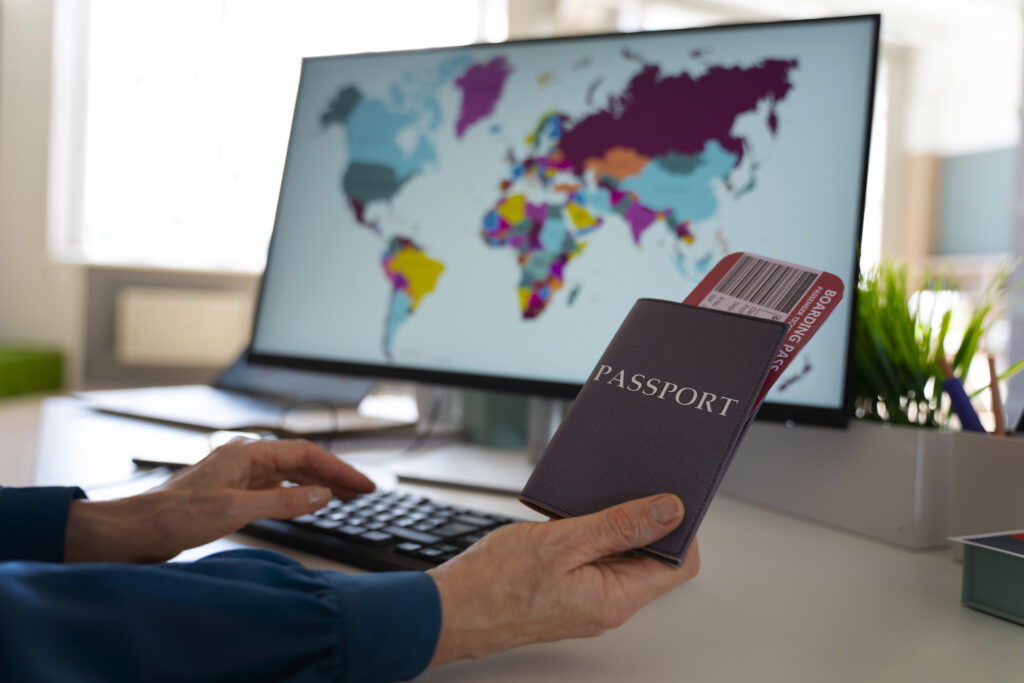
Visa application
Documents required for the visa application are as follows:
- 2 passport-size photographs
- 3 visa application forms provided by the Tunisian Consulate
- Photocopy of the first 3 pages of your passport
- Photocopy of the enrollment certificate and payment receipt
NB: Visa processing times may be long and vary depending on your country of residence. It is therefore important to begin your application as soon as you receive your final admission letter from UAS.
Preparing for Your Departure
When should you arrive?
It is strongly recommended to arrive at least one week before the start of classes. This will give you time to find accommodation and become familiar with your new environment.
For more information about the start dates of the academic year, please visit our website: www.uas.ens.tn
What financial resources should you plan for?
UAS does not offer loan or scholarship programs for international students.
Foreign applicants wishing to pursue studies in Tunisia must ensure, before leaving their country, that they have sufficient financial resources to cover their studies. Proof of sufficient funds will also be required by the Tunisian authorities in order to obtain the necessary residence permits.
Although it is difficult to estimate a student’s budget with complete accuracy, the table below provides an estimate of annual expenses, excluding tuition fees.
NB: These amounts are provided for reference purposes only / Exchange rate: €1 ≈ 2 DT
What climate and clothing should you expect?
Tunisia enjoys a Mediterranean climate. Winters are generally mild, with some cool and rainy days. Warm clothing is necessary, more to protect against humidity than against extreme cold.
Summers are dry, often very hot, and sometimes last until the end of October. Light summer clothes, preferably cotton, are highly recommended.
Average temperatures: Winter: 10°C to 18°C – Summer: 25°C to 35°C
Upon Your Arrival in Tunisia
Arrival in Tunis takes place at Tunis-Carthage Airport, located about 30 minutes from the University.
There, you will be required to present to the border police authorities your passport, student visa, university enrollment certificate, and, if requested, proof of sufficient financial resources (such as a scholarship certificate or any other supporting document).

WELCOME AT THE AIRPORT
To make your arrival easier and provide a warm welcome, the University offers direct pick-up from the airport. To arrange this service, please inform us of your arrival date and time at least 48 hours in advance.
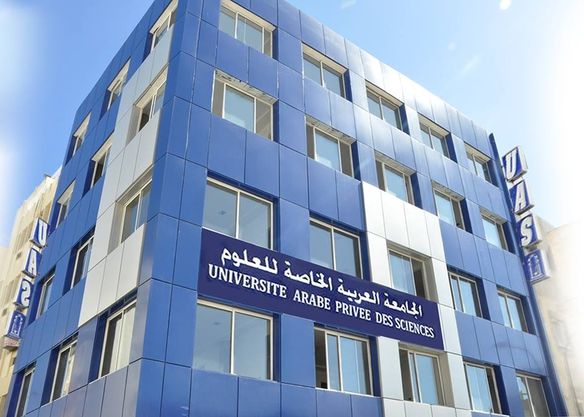
WELCOME AT THE UNIVERSITY
Upon your arrival in Tunis, you must report to the UAS Registrar’s Office to submit certified copies of all documents previously sent by fax or email, and to present the original documents.
Documents to be Submitted:
- Original admission documents if your application was sent by fax or online.
- Copy of the first pages of your passport.
- Copy of your entry visa to Tunisia, and for any subsequent renewals.
- Copy of your health insurance certificate. If you have not subscribed to insurance in your home country, you must pay for medical coverage upon arrival.
You will also have the opportunity to meet the staff of the “International Students Office” and receive information to help facilitate your settlement and integration.
ACCOMMODATION
Accommodation
Many student residences are located near the University, allowing you, if you wish, to live in nearby neighborhoods. The University can also assist you in finding suitable accommodation.
Apartment Rental
There are several types of accommodation, with prices varying depending on the neighborhood and the size of the apartment:
– Studio: Usually furnished, consisting of a single room, a kitchenette, and a bathroom. Monthly rent ranges from 400 to 500 Tunisian dinars*.
– Apartment: Comprising two, three, or four rooms, bathrooms, and a kitchen. Apartments are rarely furnished and can be shared by several people. Monthly rent ranges from 400 to 600 Tunisian dinars*.
– Villa: More spacious accommodation, with a monthly rent between 600 and 800 Tunisian dinars*.
In addition to the monthly rent, electricity, heating, and telephone costs are usually added.
Renting accommodation requires signing a lease agreement between the tenant and the landlord. This lease outlines the tenant’s rights and responsibilities and generally lasts for one year. The document, with a signature legalized at the Municipality, may be required to obtain your residence permit.
Student Residence
If you plan early enough, it is possible to reserve rooms in a private student residence even before your arrival, at approximately €50 per bed per month.
The currency in Tunisia is the Tunisian Dinar (TND), which is not convertible. One dinar is approximately €0.33.
Upon your arrival in Tunis, you can exchange your foreign currency at banks located in the airport (counters open 7 days a week) or at banks in the city.
Money Transfers
One way to receive funds in Tunisia is to have a bank transfer sent to a bank in Tunis, into an account opened in your name.
Major foreign banks often have Tunisian correspondent banks where you can receive funds.
However, bank transfers can take several weeks, so it is recommended to bring with you, in cash or traveler’s checks, a sufficient amount to cover your expenses for the first two months.
Transfers via Western Union are faster but more expensive.
Opening a Bank Account
To open a bank account, you must go to a branch of the bank you have chosen with the following documents:
– A photocopy of the first page of your passport.
– A copy of your university enrollment certificate, student ID, or a copy of your permanent or temporary residence permit.
Requirements for Obtaining Your Residence Permit
The residence permit is a mandatory document that must be applied for upon your arrival in Tunis, within one month of your stay in Tunisia.
Documents to provide:
- University enrollment certificate and tuition fee receipt
- Rental contract, or if you live in a student residence: a residence certificate
- 2 passport-size photographs
- 2 fiscal stamps of 10 TND each (to be purchased from the Finance Office)
- Proof of funds in a bank account and/or a sponsorship certificate
- Proof of health/accident insurance
The residence permit is usually issued 2 to 3 months after the application is submitted. It is valid until September 30 of the current year and can be renewed annually. In the meantime, the police station will issue a temporary permit allowing you to stay legally in Tunisia.

SOCIAL SERVICES
The University provides a medical service that looks after your health and manages the development of preventive medicine (vaccinations, medical check-ups, etc.).
Food
University Restaurants
Students at the University have access to state-run university restaurants. The price of a meal is very affordable (200 millimes = €0.10).
Other Dining Options
The University also provides a cafeteria for students.
Additionally, many small restaurants, coffees, and pizzerias are located near the University, offering a wide range of dishes at very reasonable prices.